Article Plan: ‘pdf کتاب فارسی اول دبستان’ (First Grade Persian Textbook)
This article explores the Persian first grade textbook, including its PDF availability, historical evolution, errors (over 200 reported), and cultural impact on literacy.
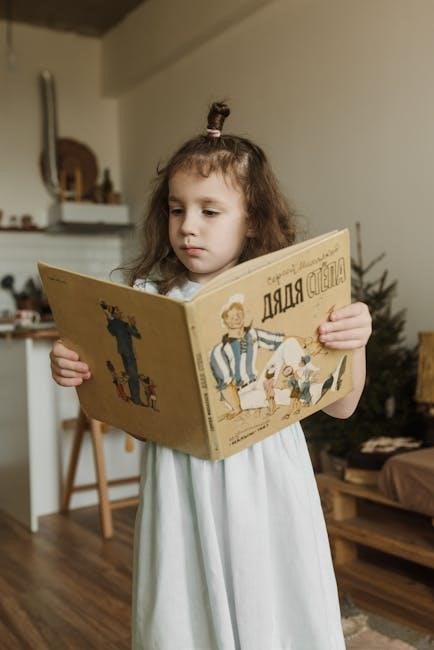
The first grade Persian textbook holds immense significance in a child’s educational journey within Iran. It’s the foundational step towards literacy, introducing the alphabet, basic vocabulary, and essential reading skills. Currently, readily available in PDF format, it allows wider access for students and educators. However, recent scrutiny reveals a concerning number of errors – exceeding 200 – prompting debate about quality control and its impact on young learners. This textbook isn’t merely about language; it’s a gateway to cultural understanding.
Historical Context of the Textbook
The Persian first grade textbook’s history spans over seven decades, with notable changes reflecting evolving pedagogical approaches and societal values. Images surfacing showcase significant differences in content and illustration styles from 70 years ago. Initially focused on rote memorization, the textbook gradually incorporated more interactive elements. This evolution mirrors Iran’s own modernization and educational reforms. Understanding this historical trajectory is crucial for appreciating the current textbook’s strengths and weaknesses, and the ongoing debates surrounding its content.
Evolution of the Textbook Over 70 Years
Over the past 70 years, the first grade Persian textbook has undergone substantial transformations. Early editions prioritized basic reading and writing skills through repetitive exercises. Later versions introduced more colorful illustrations and storytelling to engage young learners. The shift reflects a move towards child-centered learning. Contemporary textbooks attempt to integrate cultural values alongside literacy development, though recent controversies highlight ongoing challenges in balancing these objectives and maintaining accuracy.

Comparison with Past Editions (Images from 70 Years Ago)
Comparing current editions with those from 70 years ago reveals striking differences. Older textbooks featured simpler, black-and-white illustrations and a more austere layout. Content focused heavily on rote memorization of letters and basic words. Modern textbooks boast vibrant colors, engaging imagery, and a narrative approach. This evolution reflects changing pedagogical philosophies, aiming to foster a love of reading and learning from an early age, though recent illustrations have sparked debate.
Importance of the First Grade Persian Textbook
The first grade Persian textbook holds immense significance in a child’s educational journey; It serves as the foundational building block for literacy, introducing fundamental reading and writing skills. Mastery at this stage profoundly impacts future academic performance across all subjects. The textbook’s content shapes early perceptions of language and culture, making its quality and accuracy paramount for successful learning outcomes.
Foundational Role in Literacy
This textbook is crucial for establishing core literacy skills in young learners. It introduces the Persian alphabet, basic phonetic sounds, and simple vocabulary, forming the basis for reading comprehension and written expression. Successfully navigating this initial stage fosters a lifelong love of learning and unlocks access to a vast world of knowledge. Early literacy profoundly impacts cognitive development.
Impact on Future Academic Performance
A strong foundation in first grade Persian directly correlates with future academic success. Proficiency in reading and writing, established during this period, impacts performance across all subjects. Difficulties at this early stage can create lasting challenges, hindering progress in subsequent grades. Early intervention and a solid grasp of fundamentals are therefore paramount for long-term educational outcomes.
Content Analysis: Lesson Four ⏤ “Toot Tab” (Mulberry)
Lesson Four, “Toot Tab” (Mulberry), focuses on foundational literacy skills. It introduces new vocabulary related to nature and simple sentence structures. The lesson likely utilizes visual aids to connect words with images, aiding comprehension for young learners. Delگرم highlights this lesson as a complete educational unit, emphasizing basic reading and writing practice for first graders.
Detailed Explanation of the Lesson
“Toot Tab” likely begins with introducing the word “toot” (mulberry) and its pronunciation. Students practice writing the word and recognizing it in simple phrases. The lesson probably includes exercises focusing on vowel sounds and consonant-vowel combinations. It aims to build basic reading fluency through repetition and contextual learning, utilizing colorful illustrations to engage young students.
Educational Objectives of the Lesson
The “Toot Tab” lesson primarily aims to develop foundational reading skills. Objectives include recognizing and pronouncing the “toot” sound, mastering basic vocabulary related to fruits, and forming simple sentences. Students will practice handwriting and improve their understanding of Persian script. The lesson fosters early literacy and prepares them for more complex reading exercises.
Criticisms and Errors in the Current Textbook
The current first grade Persian textbook faces significant criticism due to numerous errors. A university professor and Persian language researcher identified over 200 grammatical and spelling mistakes. These errors raise concerns about the quality of educational materials and potentially hinder a child’s learning process. This issue has sparked debate among educators and parents alike.
Reported Number of Errors (Over 200)
Investigations reveal a concerning number of errors within the current first grade Persian textbook. A language researcher confirmed the presence of more than 200 grammatical and orthographic mistakes. This substantial quantity of errors has prompted widespread discussion and scrutiny. The high error count raises questions regarding the textbook’s review process and quality control measures before distribution.

Types of Grammatical and Spelling Mistakes

The reported errors encompass a range of linguistic issues. These include incorrect verb conjugations, improper use of prefixes and suffixes, and spelling mistakes affecting core vocabulary. Some errors stem from carelessness, while others suggest a lack of attention to grammatical rules. These inconsistencies potentially hinder a child’s foundational understanding of the Persian language, impacting their early literacy development.
Controversies Surrounding Textbook Illustrations
Recent years have seen controversies regarding textbook illustrations in Iran. Specifically, images in the third-grade math book and the first-grade Persian textbook sparked debate. Concerns centered on potentially inappropriate or culturally insensitive depictions. These incidents highlight a broader discussion about the role of visuals in education and their impact on young students’ perceptions and values.
Past Controversies (Third Grade Math & First Grade Persian)
Last year, illustrations in both the third-grade math and first-grade Persian textbooks ignited significant controversy within Iran’s educational system. These images generated considerable media attention and public debate, prompting criticism of the Ministry of Education’s oversight. The issues raised questions about content appropriateness and cultural sensitivity in educational materials for young children.
Impact of Illustrations on Students
Illustrations within the first-grade Persian textbook wield substantial influence over young learners, shaping their perceptions and understanding of the world. Controversial imagery can inadvertently introduce biases or cause distress, hindering the learning process. Carefully selected visuals are crucial for fostering positive associations with literacy and promoting inclusive representation for all students.

Choosing the Right Textbook for First Graders
Selecting an appropriate first-grade Persian textbook is a pivotal responsibility for both parents and educators. This crucial stage marks a child’s initial foray into formal education, demanding a resource that fosters engagement and builds foundational literacy skills. Consideration should be given to content relevance, visual appeal, and alignment with pedagogical best practices to ensure optimal learning outcomes.
Role of Parents in Textbook Selection
Parents play a vital role in selecting the best first-grade Persian textbook for their child. This involves actively researching available options, considering the textbook’s alignment with their child’s learning style, and understanding the curriculum’s objectives. Engaging with teachers to gain insights and reviewing sample lessons are also crucial steps in making an informed decision that supports early literacy development.
Role of Teachers in Textbook Implementation
Teachers are central to effectively implementing the first-grade Persian textbook. Their role extends beyond simply delivering lessons; it includes adapting teaching methods to address diverse learning needs and critically evaluating the textbook’s content for potential errors or areas needing clarification. Proactive identification and reporting of issues, alongside creative lesson planning, maximizes the textbook’s educational value.
BBC Persian’s “Shiraze” Podcast & Influential Books
BBC Persian’s “Shiraze” podcast examines impactful books from the last century, offering a broader context for understanding cultural literacy. While not directly focused on the first-grade textbook, the podcast’s discussions on influential Persian literature illuminate the historical and societal values that shape educational materials and contribute to a child’s linguistic foundation.
Discussion of Impactful Books in the Last Century
“Shiraze,” a BBC Persian podcast, delved into books profoundly shaping Persian culture over the past 100 years. These works, though differing from a first-grade primer, represent the literary heritage influencing language development and national identity. Examining these texts provides insight into the values and narratives subtly embedded within educational resources like the textbook.
Relevance to the First Grade Persian Textbook
The BBC Persian “Shiraze” podcast’s exploration of impactful 20th-century books highlights the broader literary landscape influencing Persian language education. While distinct from foundational texts, these works demonstrate the richness of the language and cultural narratives that the first-grade textbook aims to introduce to young learners, fostering a love for reading.
Availability of the Textbook in PDF Format
The Persian first grade textbook is frequently sought in PDF format for convenient access and backup purposes. Numerous online sources offer downloadable PDFs, though users must carefully consider legality and copyright implications. Accessing these digital versions allows for wider distribution and supports remote learning initiatives, benefiting students and educators alike.
Sources for Downloading the PDF
Various websites host the Persian first grade textbook in PDF format, ranging from educational resource platforms to general file-sharing sites; However, verifying the source’s legitimacy is crucial to avoid malware or copyright infringement. Some educational websites offer legally compliant downloads, while others may present risks. Careful scrutiny and responsible downloading practices are essential.
Legality and Copyright Considerations
Downloading the PDF of the Persian first grade textbook raises copyright concerns. Officially, distribution requires permission from the Ministry of Education and publishers. Unauthorized downloads may infringe on copyright laws. While often shared for educational purposes, accessing these PDFs without proper authorization remains legally questionable. Users should prioritize legally obtained copies to support authors and publishers.
The Role of Persian Language Researchers in Textbook Evaluation
Persian language researchers are crucial for identifying and reporting errors within the first grade textbook. With over 200 reported mistakes, their expertise is vital for comprehensive evaluation. They can analyze grammatical inaccuracies, spelling errors, and problematic illustrations, offering suggestions for improvement to enhance the textbook’s quality and educational value for young learners.
Identifying and Reporting Errors
A systematic approach to identifying errors is essential, given the reported 200+ mistakes in the first grade Persian textbook. Researchers and educators must meticulously review content, noting grammatical and spelling inaccuracies. Establishing a clear reporting mechanism – perhaps a dedicated online platform – allows for efficient communication of these errors to relevant educational authorities for prompt correction and future textbook revisions.
Suggestions for Improvement
To enhance the textbook, a rigorous review process is crucial, involving linguists and experienced educators. Prioritizing accuracy through multiple proofreads and incorporating diverse perspectives can minimize errors. Addressing controversial illustrations proactively, and ensuring cultural sensitivity, is vital. Furthermore, exploring interactive PDF features could boost engagement and learning outcomes for first-grade students.
The Textbook’s Contribution to Cultural Literacy
The first grade Persian textbook plays a pivotal role in transmitting cultural values and heritage. It introduces foundational stories, poems, and vocabulary reflecting Iranian identity. By exposing children to their linguistic roots, the textbook fosters a sense of belonging and national pride. It’s a cornerstone for understanding Persian literature and traditions, shaping future generations’ cultural awareness.
Teaching Methods Utilizing the Textbook
Effective teaching with the first grade Persian textbook involves interactive methods. Teachers often employ storytelling, visual aids, and games to engage young learners. Focusing on phonics and repetition aids reading comprehension. Utilizing the “Toot Tab” lesson, educators encourage participation through drawing and role-playing. Parental involvement, alongside teacher guidance, is crucial for successful literacy development.
Future Trends in First Grade Persian Textbook Design
Future Persian textbooks will likely integrate more digital resources, including interactive PDFs and educational apps. Addressing reported errors – exceeding 200 – is paramount. Illustration controversies necessitate careful vetting for cultural sensitivity. A focus on inclusive language and diverse representation will be key. Design will prioritize engaging, multi-sensory learning experiences, moving beyond traditional methods.
Resources for Parents and Teachers

Parents and teachers can access the textbook in PDF format from various online sources, though copyright legality must be considered. BBC Persian’s “Shiraze” podcast offers insights into impactful Persian literature. Language researchers’ reports detail textbook errors. Online forums provide platforms for sharing teaching strategies and addressing concerns regarding content and illustrations.
Despite identified errors and past controversies surrounding illustrations, the first grade Persian textbook remains fundamentally crucial for foundational literacy. Ongoing evaluation by researchers and collaborative efforts between parents, teachers, and educational bodies are vital. Addressing shortcomings ensures continued relevance and effective cultural transmission for future generations of Persian speakers.
No Responses